About The Breed
Bunny Trail Farm
Holland Lop Fact Sheet (by Pam Niock).


Common Name:  Lop - Holland
Other Common Names:  Dwarf Lop, Netherland Dwarf Lop
Scientific Name:  Oryctolagus cuniculus  
Group:  Fancy
Origin or Range:  Netherlands
Relative Size:  Smaller Than Average (as compared to
other rabbits)
Average Lifespan:  10 year(s)
Compatibility:  Relatively Non-Aggressive  (as compared to
other rabbits)
Category:  Mammals » Rabbits


Animal Description:   
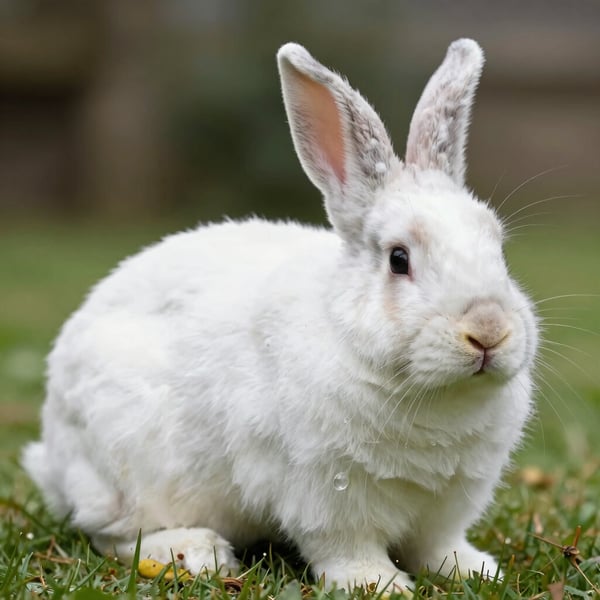
The Holland Lop is a small rabbit that is both charming and
loving. Breeders and owners both enjoy Holland Lops a lot.

Although Holland Lops are small, they are active and quite
playful, so they should be housed in a cage that will give
them plenty of room. Three quarters of a square foot per
pound of adult weight of floor space in a cage is pretty
much the rule of thumb for rabbit cages of any breed.
Holland Lops are a good choice for a new rabbit owner.
Some does (females) tend to be skittish and/or hyper and
should be handled carefully. Holland Lops are generally
very easy to care for and are a popular breed for pets due
to their size and fun-loving nature.

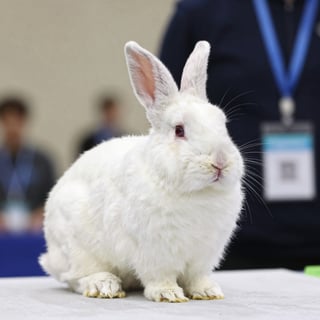
Holland Lops weigh between three and four pounds,
though three pounds is the ideal in the show ring. Holland
Lops are known for their short, cobby bodies, round heads,
and massive appearance in a small rabbit. Holland Lops
have short, dense fur that comes in a variety of colors.
Holland Lops are shown in two basic color classifications;
Solid (not spotted) and Broken (spotted). Within these
classifications there are several groups and colors. These
groups are classified as follows.

The Agouti Group comes from the name "agouti" which is a
term that means the hair shafts have three or more colors
on them. Agouti types include Chestnut Agouti, Chocolate
Agouti, Chinchilla, Chocolate Chinchilla, Lynx, Opal, and
Squirrel which may also be known as Blue Chinchilla.

The Broken Group. As well as being a show classification,
the Broken group also encompasses Tricolor and Regular
Broken. To be considered Broken (White in conjunction
with any recognized color, there must be color on the nose
area, on both ears, around both eyes, and on the body.
The color should cover no less than 10% of the rabbit and
no more than 70%), Tricolor (black and orange with white,
blue and fawn with white, chocolate and orange with white,
or lilac and fawn with white; like a calico cat).

The Pointed White Group. This group consists of those that
are White with "points" of color on the nose, both ears, all
four feet and legs, and the tail. Colors that are accepted
are white that has black, blue, chocolate, or lilac points.
Solid colored rabbits are classified in the Self Group.

The Self Group may be Black, Blue, Chocolate, Lilac, Blue
Eyed White, or Ruby Eyed White also known as Albino.

The Shaded Group are those rabbits that have a body
color and either a darker shade of the same color or a
different color on the head, ears, feet, legs, tail, and
haunches. Rabbits falling into this group include, Sable
Point, Siamese Sable, Seal, Smoke Pearl, Tortoise (black,
blue, chocolate, or lilac shading).

The Ticked Group. Members of this group have a base
color with either silver or gold tipped hairs scattered evenly
throughout. An example of the Ticked Group is the Steel
which have a black, blue, chocolate, or lilac base color with
gold or silver tipping.

The Wide Band Group. Wide Band rabbits, except the
Frosty (which is white, sometimes with a slight tinge of
color) are either a golden or reddish-orange with white or
cream on the belly, around each eye, inside each ear, on
the underside of the tail, and on the underside of the jowls.
Some color variations of the Wide Band group include,
Cream, Fawn, Frosty, Orange, Red. It should be noted that
rabbits with ears that are carried above horizontal are
disqualified in the show ring.

They have ears that hang down about an inch below their
jawbone and sit next to their cheeks. The head on a
Holland Lop should be high on its shoulders. Holland Lops
go through a period of puberty where they can look a little
unattractive, but they generally grow out of it at about four
months. The timing of this stage can vary depending on the
bloodline. Most go through the "uglies" at between two and
four months of age. They typically do not finish "blooming"
into their full show potential until they are between 12 and
18 months.

Adrian De Cock, a man from the Netherlands, developed
the Holland Lop. They are a cross of a Netherland Dwarf,
French Lop and English Lop. The breed was perfected by
1955 and was first seen in the United States in 1976. The
American Rabbit Breeder's Association recognized the
Holland Lop in 1980.


Specific Care Information: Relative Care Ease: Relatively
Easy

Cage size should be a minimum of 24 inches by 24 inches.
Proper shelter with heating as well as cooling should be a
factor also. Holland Lops are reported to do well on a diet
of pellets combined with Timothy hay, some people also
choose to add greens to the diet, though greens have
been reported to cause diarrhea. Overfeeding of alfalfa
can lead to health problems, and if they are fed solely on
alfalfa the results can be fatal. Other choices can include
dark green vegetables, carrots, dandelions, clover, and
dried papaya. Lettuce and cabbage should be avoided, as
they do not have much nutritional value for rabbits. These
are affectionate rabbits that enjoy being pet often, though
some report they do not like to be touched on the chin.


Breeding and Propagation: Relative Breeding Ease:
Relatively Difficult

Holland Lops can prove to be challenging to breed. Finding
the right Doe for breeding is the key to success. After
mating the female will undergo a gestation period of
approximately 31 days, with litters averaging four kits. Like
other dwarf breeds, they do have occasional "peanut"
babies, which is when the baby inherits two dwarfing genes
- this is a lethal gene combination.

It has been reported that it is not uncommon for Holland
does to lose their first and maybe even their second litter of
kits so don't get discouraged. It usually takes two to three
tries to get a healthy litter. Also, when you are not
breeding, bucks and does should not be caged right next to
each other if their cages are made of wire because they
have been known to mate through the wire.
© 2006-2011  Bunny Trail Farm.